Why Does My Sump Pump Keep Running?
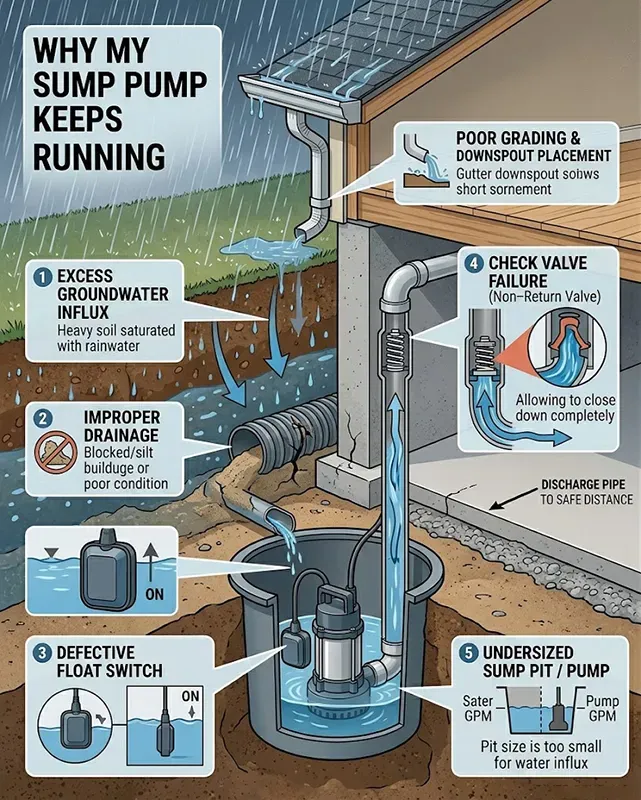
A sump pump is your basement's first line of defense against water, and during a heavy storm it's normal to hear it cycle on and off often. But if your sump pump runs constantly, runs when it hasn't rained, or turns on and off every few seconds, something may be wrong. A pump that never gets a break can burn out early, often right when you need it most.
Is It Normal for a Sump Pump to Run Constantly?
Sometimes. During and after heavy rain, snowmelt, or a tropical storm, groundwater can flow into the sump pit faster than usual, and your pump may run almost nonstop until the ground drains. Homes near the Chesapeake Bay and its rivers, or in low-lying areas with a high water table, may see their pumps run frequently for days after a storm.
If your pump keeps running during dry weather, or runs even when the pit is empty, that's a sign of a problem that needs attention.
What Causes a Sump Pump to Keep Running?
A stuck or tangled float switch
The float switch tells the pump when to turn on and off. If it gets stuck in the "on" position, tangled on the power cord, or blocked by debris or the side of the pit, the pump may keep running after the water is gone.
A failed check valve
The check valve keeps water in the discharge pipe from flowing back into the pit after the pump shuts off. If it fails, the same water drains back down, the pit refills, and the pump runs again, over and over.
The pump is the wrong size
An undersized pump can't keep up with the water coming in, so it runs continuously. An oversized pump in a small pit empties it too quickly and short-cycles, turning on and off rapidly and wearing out its motor.
A frozen or clogged discharge line
If the discharge line is blocked by ice, dirt, or debris, water can't leave the pit. The pump keeps running without actually moving water, which can overheat and damage the motor.
An air lock in the pump
Air trapped in the pump housing can keep it from pushing water out, even though the motor is running. A small relief hole between the pump and the check valve usually prevents this, and a missing or clogged one can cause the problem.
Water coming from somewhere else
Poor yard grading, clogged gutters, downspouts that drain too close to the foundation, or even a leaking water line can send extra water into your sump pit and keep your pump busy.
What Can I Check Myself?
Start by looking into the sump pit. If there's no water and the pump is running, the float switch is the most likely culprit. Make sure it moves freely and isn't caught on anything. If the pit refills right after the pump shuts off, the check valve may be failing. Outside, check that the discharge line isn't blocked, frozen, or crushed, and that gutters and downspouts are directing water well away from your foundation.
Always unplug the pump before reaching into the pit, and never stand in water while handling electrical equipment.
When Should I Call a Plumber?
Call a professional if the pump runs constantly with no clear cause, cycles on and off rapidly, makes grinding or rattling noises, or if you see water rising in the pit while the pump is running. You should also call if your pump is more than seven to 10 years old, since older pumps are more likely to fail during a storm. A plumber can test the pump, replace worn parts, correct sizing problems, and make sure the discharge line and check valve are working properly.
Should I Add a Backup Sump Pump?
A backup pump is worth considering, especially if your basement is finished or you've had water problems before. Battery backup pumps keep working during power outages, which often happen during the same storms that send the most water into your pit. A backup also protects you if your primary pump fails.
How Can I Keep My Sump Pump Working Properly?
Test your pump a few times a year by pouring a bucket of water into the pit and making sure it turns on, empties the pit, and shuts off. Clean debris out of the pit, check that the float moves freely, and make sure the discharge line is clear, especially before storm season and winter. A yearly inspection by a plumber can catch worn parts before they fail.
If floodwater has already reached your home, see our guide on what to do when your heat pump is flooded.
Sump Pump Repair in Southern Maryland
Tri-County Aire helps Southern Maryland homeowners keep their basements dry with sump pump repair, replacement, and backup pump installation. If your sump pump won't stop running, give us a call before it fails when you need it most.
Frequently Asked Questions
How often should a sump pump run?
It depends on the weather and your water table. It's normal for a sump pump to run often during and after heavy rain, but it shouldn't run constantly during dry weather.
Can a sump pump run too much?
Yes. Constant running wears out the motor and can cause the pump to fail early.
How long do sump pumps last?
Most sump pumps last about seven to 10 years, depending on how often they run and how well they're maintained.
Do I need a battery backup sump pump?
If your home loses power during storms or your basement is finished, a battery backup pump is a smart way to protect against flooding.