What to Do When
Your Heat Pump Is Flooded
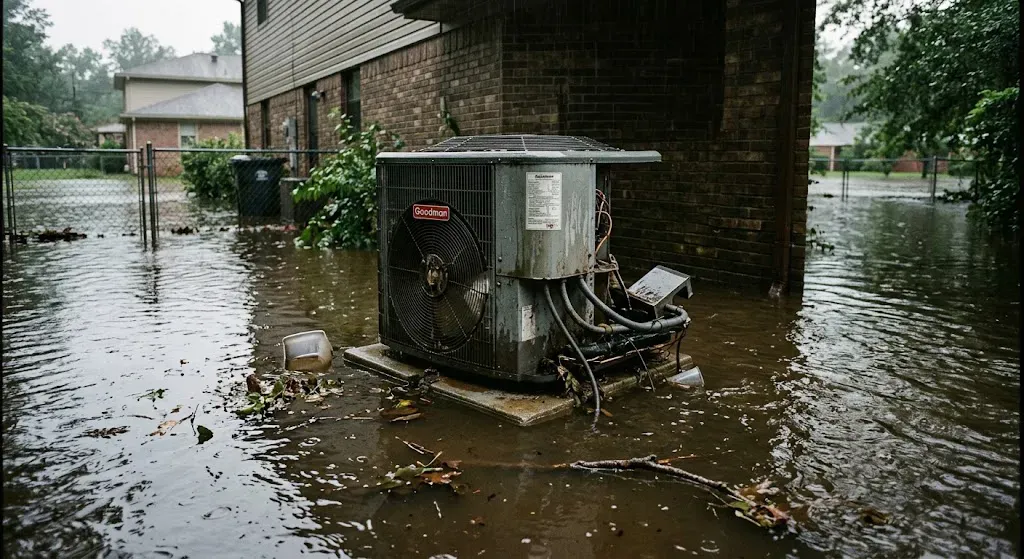
Southern Maryland gets its share of tropical storms, nor'easters, and heavy downpours, and homes near the Patuxent, the Potomac, and the Chesapeake Bay are especially prone to standing water. When floodwater reaches your heat pump, how you handle the first few hours can make the difference between a repair and a full replacement.
Is a Flooded Heat Pump Safe to Turn On?
No. If floodwater has reached your heat pump's electrical components, do not turn it on until a licensed HVAC technician has inspected it. Outdoor heat pumps are built to handle rain, but they are not designed to be submerged. Water that rises above the base of the unit can reach the compressor, fan motor, control board, wiring, and electrical connections. Powering up a unit in that condition risks electrical shock, fire, and permanent damage to the system.
What Should I Do Right Away?
1. Shut off power to the system
Turn off the heat pump at the thermostat, then switch off its breaker at your electrical panel. If you can reach the outdoor disconnect box safely without standing in water, turn that off too. Never touch electrical equipment while you are standing in water or while the equipment is still wet.
2. Stay clear until the water recedes
Floodwater can hide debris, carry contaminants, and conduct electricity. Wait until the water has fully drained before approaching the outdoor unit or an indoor air handler in a flooded basement or crawl space.
3. Document the damage
Take photos and video of the unit, the high-water mark, and the surrounding area. Note the date and how long the equipment sat in water. This record helps with insurance claims and helps your technician assess what was affected.
4. Check your insurance coverage
Standard homeowners policies typically do not cover flood damage, while flood insurance (including National Flood Insurance Program policies) may cover HVAC equipment. Contact your insurer early, and ask whether they need an inspection report before repairs begin.
5. Schedule a professional inspection
A technician will check the electrical components, control board, compressor, fan motor, refrigerant lines, and coils for water damage, corrosion, and contamination. They will also look at the ductwork if your indoor unit or ducts were affected, since flooded ducts can hold mold and bacteria.
How High Does Water Have to Get to Damage a Heat Pump?
Any water that rises above the unit's base pan and reaches internal components is a concern. Brief exposure may only require cleaning and drying, but saltwater or brackish water from tidal flooding is far more corrosive and often causes damage that shows up weeks or months later. That's why an inspection matters even when the system seems to run normally afterward.
Can a Flooded Heat Pump Be Repaired, or Does It Need to Be Replaced?
It depends on how deep the water got, how long the unit was submerged, and whether the water was fresh or salty. Some units can be dried, cleaned, and returned to service with a few replaced parts. Others, especially those with a water-damaged compressor or significant corrosion, cost more to repair than to replace. A qualified technician can walk you through both options so you can make the right decision for your home and budget.
What About the Indoor Unit and Ductwork?
If floodwater reached your basement, crawl space, or garage, your air handler, furnace, or ductwork may also be affected. Flooded ductwork can harbor mold, mildew, and bacteria that circulate through your home once the system runs again. Insulated flex duct usually needs to be replaced after flooding, while metal ducts may be cleaned and sanitized depending on the level of contamination.
How Can I Protect My Heat Pump From Future Flooding?
If your property floods more than once, consider elevating the outdoor unit on a raised pad or mounting platform above the expected flood level. Improving yard drainage and grading around the unit helps direct water away from it. For indoor equipment in flood-prone basements, relocating the air handler to a higher level of the home may be worth discussing with your HVAC contractor.
Heat Pump Flood Damage Inspection in Southern Maryland
Tri-County Aire has served homeowners across Southern Maryland for years, and our technicians know what storm and flood damage can do to heating and cooling equipment. If your heat pump has been exposed to floodwater, leave it off and give us a call. We'll inspect your system, explain what we find, and help you get your home comfortable again safely.
Call Tri-County Aire at 800-890-5123 to schedule a flood damage inspection.
Frequently Asked Questions
Can I run my heat pump after a heavy rain?
Yes, normal rain isn't a problem. Heat pumps are designed for outdoor weather. The concern is standing floodwater that rises into the unit.
How long should I wait before turning my heat pump back on after a flood?
Don't turn it on at all until a licensed technician has inspected it and confirmed it's safe.
Does homeowners insurance cover a flooded heat pump?
Standard homeowners policies usually exclude flood damage. Flood insurance may cover it. Check with your insurance provider.
Is saltwater flooding worse for a heat pump?
Yes. Saltwater and brackish water are highly corrosive and can cause delayed damage to coils, wiring, and electrical components.