How to Prepare Your HVAC System for Hurricane Season
Atlantic hurricane season runs from June 1 through November 30, and Southern Maryland feels its effects every year, from tropical storms and heavy rain to high winds, tidal flooding, and power outages. Your outdoor heat pump or air conditioner sits exposed to all of it. A little preparation before a storm can protect your system, prevent costly repairs, and help you get your home comfortable again faster once the weather clears.
When Should I Start Preparing My HVAC System for Hurricane Season?
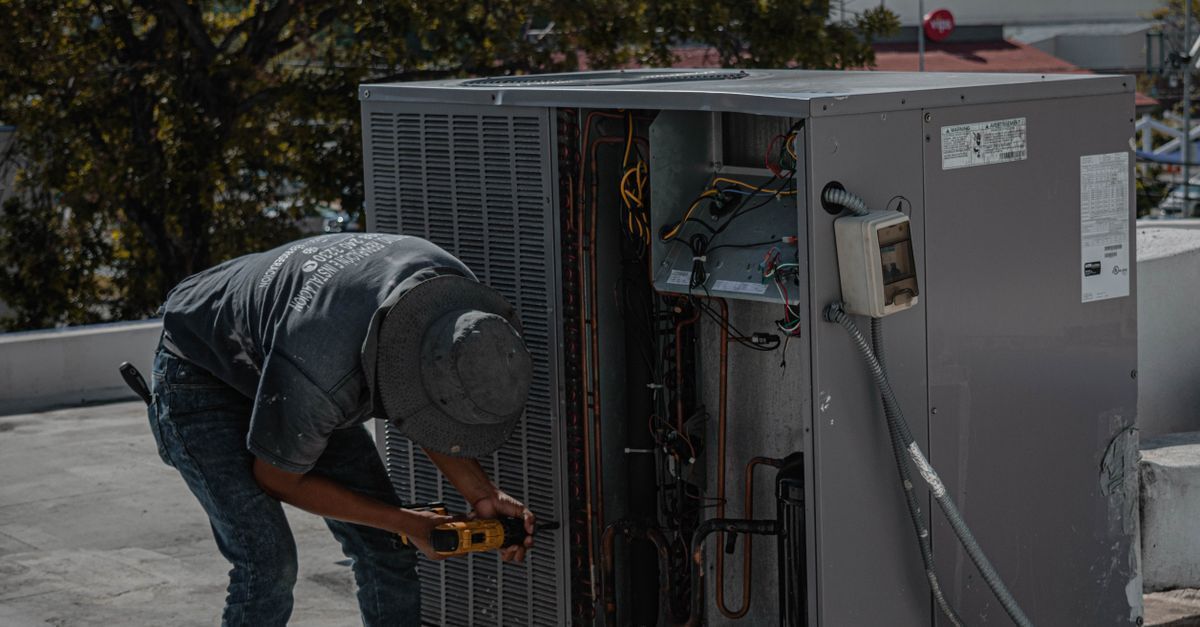
Early summer is the best time, before storms start forming. Scheduling a professional tune-up in late spring or early summer ensures your system is running well going into the hottest months, and it gives a technician the chance to spot loose panels, worn electrical parts, or drainage problems that a storm could make worse. If a storm is already in the forecast, there are still steps you can take in the days before it arrives.
How Do I Protect My Outdoor Unit From High Winds?
Start by clearing the area around your outdoor unit. Bring in or tie down patio furniture, grills, planters, toys, and anything else that could be blown into it. Trim trees and branches that hang over or near the unit, since falling limbs are one of the most common causes of storm damage to HVAC equipment.
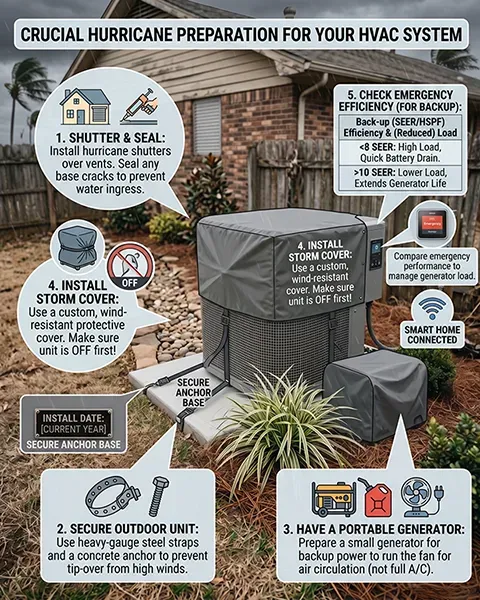
Next, make sure the unit itself is secure. In areas exposed to strong winds, outdoor units can be anchored to their pad with hurricane straps or tie-down brackets. Check that the pad is level and stable, and ask your HVAC technician whether your unit is properly secured.
Should I Cover My Outdoor Unit Before a Storm?
A breathable cover or tarp can help keep debris out of the unit during a storm, but only while the system is turned off. Never run your heat pump or air conditioner with a cover on it, since it blocks airflow and can seriously damage the system. Remove the cover as soon as the storm passes and before turning the system back on.
Should I Turn Off My HVAC System During a Hurricane?
Yes. Before the storm arrives, set your thermostat a few degrees cooler than usual to pre-cool your home and bring down indoor humidity. Then, when the storm reaches your area, turn off the system at the thermostat and switch off its breaker. Power surges and flickering power during a storm can damage your compressor and electrical components, and turning the system off helps protect it.
Know where your electrical panel and outdoor disconnect box are before the storm, so you can shut the system off quickly and safely.
Is My HVAC System at Risk of Flooding?
If your home is in a low-lying area or near the water, your outdoor unit could be exposed to floodwater. For homes that flood regularly, raising the outdoor unit on an elevated pad or platform above the expected flood level is one of the best long-term protections. Keeping gutters, downspouts, and yard drains clear also helps move water away from your unit and foundation.
If floodwater does reach your system, don't turn it back on. See our guide on what to do when your heat pump is flooded.
Can I Run My HVAC System on a Generator?
It depends on the generator. Most portable generators aren't large enough to run a central heat pump or air conditioner, and connecting one improperly can damage your equipment and create serious safety hazards, including backfeeding power into utility lines. A properly sized standby generator installed by a licensed professional can power your HVAC system during an outage.
Never run a generator indoors, in a garage, or near windows, doors, or air intakes, since carbon monoxide can quickly build up to deadly levels.
What Should I Check After the Storm Passes?
Before turning your system back on, walk around your outdoor unit and look for damage. Check for debris inside or on top of the unit, bent or crushed fins, a shifted or tilted unit, damaged refrigerant lines, and loose or exposed wiring. Remove any cover you placed on the unit, and clear away branches, leaves, and debris.
Wait until power has been fully and reliably restored before turning the system on. If you see any damage, smell burning, hear unusual noises once it's running, or if the unit was exposed to floodwater, turn it off and call an HVAC professional.
Why Does Indoor Humidity Matter After a Hurricane?
After a storm, especially one that caused a power outage or water intrusion, humidity inside your home can climb quickly. High humidity can lead to mold and mildew growth within a day or two. Getting your HVAC system back up and running safely helps dry out the air and protect your home. If your ductwork or indoor unit was exposed to water, have it inspected before running the system.
Hurricane Season HVAC Service in Southern Maryland
Tri-County Aire helps Southern Maryland homeowners prepare their heating and cooling systems for storm season and get back up and running afterward. We offer pre-season tune-ups to make sure your system is ready and post-storm inspections to check for damage before you turn it back on.
Call Tri-County Aire at 800-890-5123 to schedule a tune-up or storm damage inspection.
Frequently Asked Questions
Should I turn off my AC during a hurricane?
Yes. Turn off your system at the thermostat and the breaker when the storm arrives to protect it from power surges.
Can I cover my AC unit during a hurricane?
A breathable cover can keep debris out while the system is off, but always remove it before turning the system back on.
How do I know if my HVAC system was damaged in a storm?
Look for debris, bent fins, a shifted unit, damaged lines, or exposed wiring. If you notice any damage, or if the unit was flooded, have a technician inspect it before running it.
When does hurricane season start and end?
Atlantic hurricane season runs from June 1 through November 30.