What Should I Do When a Pipe Bursts?
A burst pipe can release hundreds of gallons of water into your home in a matter of hours, damaging floors, walls, ceilings, and everything in its path. Whether it's caused by a freeze, aging pipes, or high water pressure, how quickly you act makes a big difference in how much damage you'll have to repair. Here's what to do the moment you discover a burst pipe.
What Is the First Thing to Do When a Pipe Bursts?
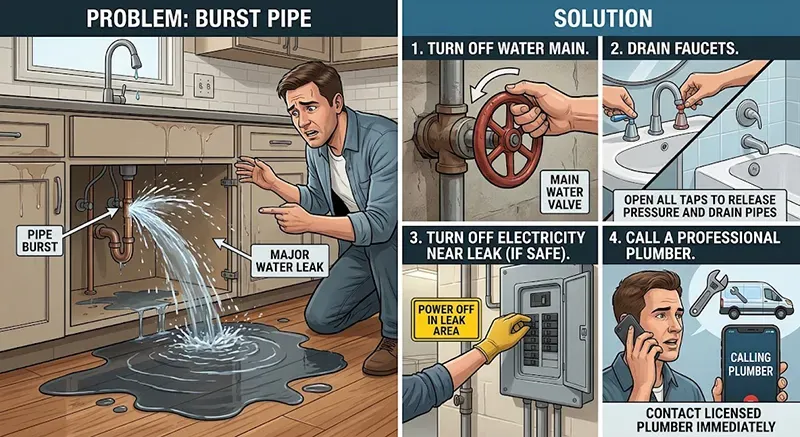
Shut off your home's main water supply. This stops the flow of water to the broken pipe and is the most important step in limiting damage. The main shutoff valve is usually located where the water line enters your home, often in the basement, crawl space, utility room, garage, or near the water heater. Turn the valve clockwise until it stops.
If your home is on a private well, turn off the breaker for the well pump as well. Every homeowner should know where their main shutoff valve is before an emergency happens, so take a moment to find yours today if you're not sure.
Should I Turn Off the Electricity?
If water is near outlets, electrical panels, appliances, or light fixtures, turn off power to the affected area at your electrical panel, but only if you can reach the panel without standing in water. If you can't safely reach it, stay out of the area and call your utility company or an electrician. Never touch electrical equipment while standing in water.
What Should I Do After the Water Is Shut Off?
Drain the remaining water from your pipes
Open your cold water faucets and flush your toilets to drain the water left in the lines and relieve pressure on your plumbing. This helps reduce leaking from the damaged pipe.
Turn off your water heater
With the water supply off, turn off your water heater to protect it from damage. For an electric water heater, switch off its breaker. For a gas water heater, turn the gas control to the "pilot" or "vacation" setting.
Remove standing water and move belongings
Mop up standing water, use towels and a wet/dry vacuum, and move furniture, rugs, electronics, and valuables out of the wet area. Open windows and run fans to start drying the space. The faster you dry things out, the lower your risk of mold, which can begin growing within 24 to 48 hours.
Document the damage
Take photos and video of the burst pipe, the water damage, and any damaged belongings before cleaning up too much. Your insurance company will likely ask for them.
Will Homeowners Insurance Cover a Burst Pipe?
Many homeowners policies cover sudden and accidental water damage from a burst pipe, though coverage for the pipe repair itself may vary. Damage from a slow, ongoing leak or from a lack of maintenance is often excluded. Call your insurance company as soon as possible to report the damage and ask what documentation they need.
Can I Fix a Burst Pipe Myself?
A pipe repair clamp, repair tape, or a rubber patch can temporarily slow a small leak, but these are short-term fixes only. A burst pipe needs a proper repair by a licensed plumber, who can replace the damaged section, check for other weak spots, and make sure your plumbing is safe to use before the water is turned back on.
What Causes Pipes to Burst?
Freezing is one of the most common causes. When water freezes inside a pipe, it expands and builds pressure until the pipe splits, often in unheated spaces like crawl spaces, attics, garages, and exterior walls. Other causes include corrosion in older pipes, high water pressure, shifting soil, tree roots, and clogs that build up pressure over time.
How Can I Tell If I Have a Hidden Burst Pipe?
Not every burst pipe is obvious. Warning signs include a sudden drop in water pressure, the sound of running water when all fixtures are off, water stains or bulging on walls and ceilings, puddles with no clear source, musty odors, and an unusually high water bill. If you notice any of these, shut off your water and call a plumber.
How Can I Prevent Pipes From Bursting?
Insulate pipes in unheated areas like crawl spaces, attics, and garages. During cold snaps, keep your home heated, open cabinet doors under sinks on exterior walls, and let faucets drip slowly to keep water moving. Disconnect garden hoses and shut off outdoor spigots before winter. If you're leaving home for an extended time, consider shutting off your main water supply. A plumber can also check your water pressure and inspect older pipes for signs of wear.
Emergency Plumbing in Southern Maryland
A burst pipe can't wait. Tri-County Aire offers 24/7 emergency service to help Southern Maryland homeowners stop the damage and get their plumbing repaired quickly and correctly. If a pipe has burst in your home, shut off your water and call us right away at 800-890-5123.
Frequently Asked Questions
Where is my main water shutoff valve?
It's usually where the water line enters your home, often in the basement, crawl space, utility room, garage, or near the water heater.
How much water can a burst pipe release?
A burst pipe can release hundreds of gallons of water in just a few hours, which is why shutting off the water quickly is so important.
How soon can mold grow after a burst pipe?
Mold can begin growing within 24 to 48 hours, so start drying the affected area as soon as possible.
Should I turn off my water heater if a pipe bursts?
Yes. Once the main water supply is off, turn off your water heater to protect it from damage.